

Focus Keyword: Smart Fan Light Remote
Introduction
Smart Fan Light Remote technology is changing how homeowners control comfort and lighting, offering convenient remote, app, and voice-based management for modern ceiling fans. With energy costs rising and smart devices gaining popularity, upgrading to a smart fan light remote can streamline your living environment. In this guide, you’ll get a data-driven look at current market trends, actionable upgrade steps, and an honest take on real-world challenges.
Key Takeaways
- Smart fan light remote adoption is growing globally, with adoption rates and smart home integration accelerating in 2024.
- The best smart ceiling fans with light offer voice/app control, energy efficiency, and multi-platform compatibility, but upgrade costs and compatibility can be hurdles.
- Understanding the differences between remotes, apps, and voice assistants helps avoid common pitfalls and ensures a smooth smart fan experience.
- Introduction
- What Is a Smart Fan Light Remote and Why Should You Care?
- How to Upgrade to a Smart Fan Light Remote: Step-by-Step Guide
- Advanced Analysis and Common Pitfalls
- Conclusion
- FAQ
What Is a Smart Fan Light Remote and Why Should You Care?
A smart fan light remote is a system that allows you to control your ceiling fan and its lighting through a physical remote, smartphone app, or voice assistants like Alexa or Google Assistant. Unlike basic remote kits, smart models integrate with your home’s Wi-Fi or Bluetooth, enabling automation, energy savings, and scheduling that traditional fans lack.
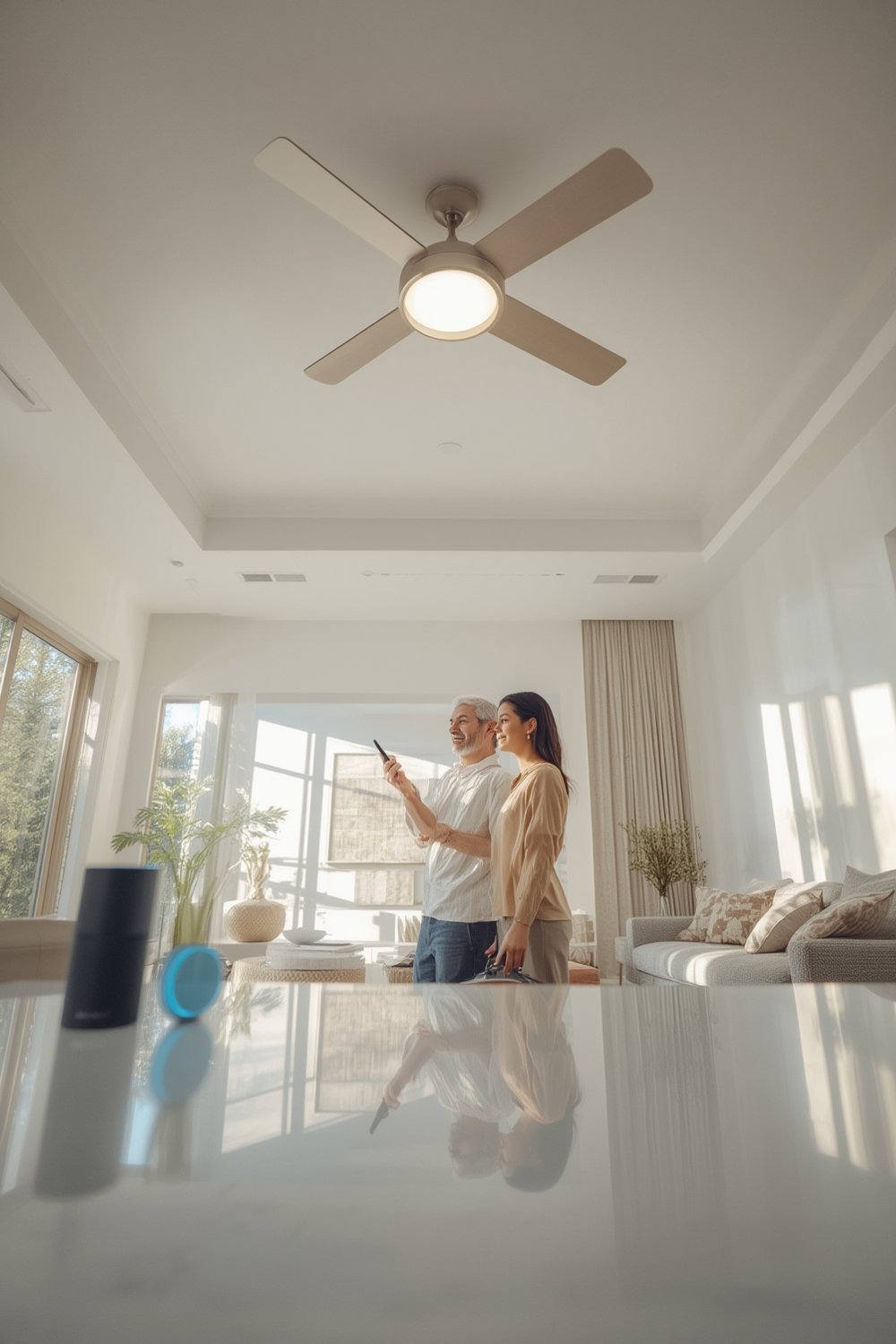
The biggest reason to care: convenience and efficiency. Modern smart ceiling fans deliver multi-platform control, with 68% of 2024 launches supporting integration across different systems (source). Energy savings are notable—smart fan light systems provide 37% to 43% more efficiency over traditional models, reducing energy bills and supporting sustainability goals.
The residential market dominates smart ceiling fan sales, commanding over 76% share thanks to rising smart home penetration in the US, Asia-Pacific, and Europe (source). In addition to improved comfort, these systems add value, supporting circadian lighting, hands-free voice control, and app-based scheduling—ideal for busy families, renters, and anyone seeking a more adaptive home environment. For other innovative smart lighting ideas, see smart can lights and RGB gaming lights.
How to Upgrade to a Smart Fan Light Remote: Step-by-Step Guide
Upgrading to a smart fan light remote can be straightforward, but requires choosing the right kit and ensuring compatibility with your existing fixture. Here’s how to make the switch for maximum benefit:
-
Identify Your Current Ceiling Fan Setup:
- Confirm your fan supports remote or smart module installation—look for a mounting bracket and space in the canopy for a receiver.
- If you have a newer fan, check the manufacturer’s site for compatible remote/smart kits.
- Many premium smart fans bundle lighting and IoT controls, such as Hunter Fan Alexa-built-in or Orient Aeroslim models.
-
Select Your Smart Fan Light Remote Kit:
- Choose between smart remotes that work via radio or Bluetooth (for fans without Wi-Fi) or fully connected Wi-Fi kits that integrate with Alexa/Google Assistant or dedicated apps.
- Check for multi-platform support and compatibility with your home ecosystem.
- LED efficiency, circadian rhythm lighting, and sweep size (1000-1500 mm with 4 blades) are best for most homes (source).
-
Installation:
- Turn off power at the breaker. Remove the fan canopy—usually, two screws release the cover.
- Mount the smart receiver inside. Connect wires as labeled (Live, Neutral, Light, Fan) using provided instructions.
- Reattach the canopy, restore power, and test remote function.
- Mount the light kit or swap integrated LED panels as needed. For guidance, see our LED strip diffuser install guide for tips on working with modern LED fixtures.
-
Connect via App or Voice Platform:
- Download the branded app (or compatible platform, like Smart Life), pair the remote, and follow in-app setup for connecting to Wi-Fi or Bluetooth.
- Activate Alexa or Google Assistant skills for voice operation if supported.
-
Configure Automation:
- Set schedules for lights and fan speeds. Enable circadian rhythm modes for natural lighting cycles.
- Link the fan to routines with other smart devices, such as triggers for comfort or energy savings. Looking for whole-room automation? Explore circadian rhythm lighting for wellness-focused schedules.
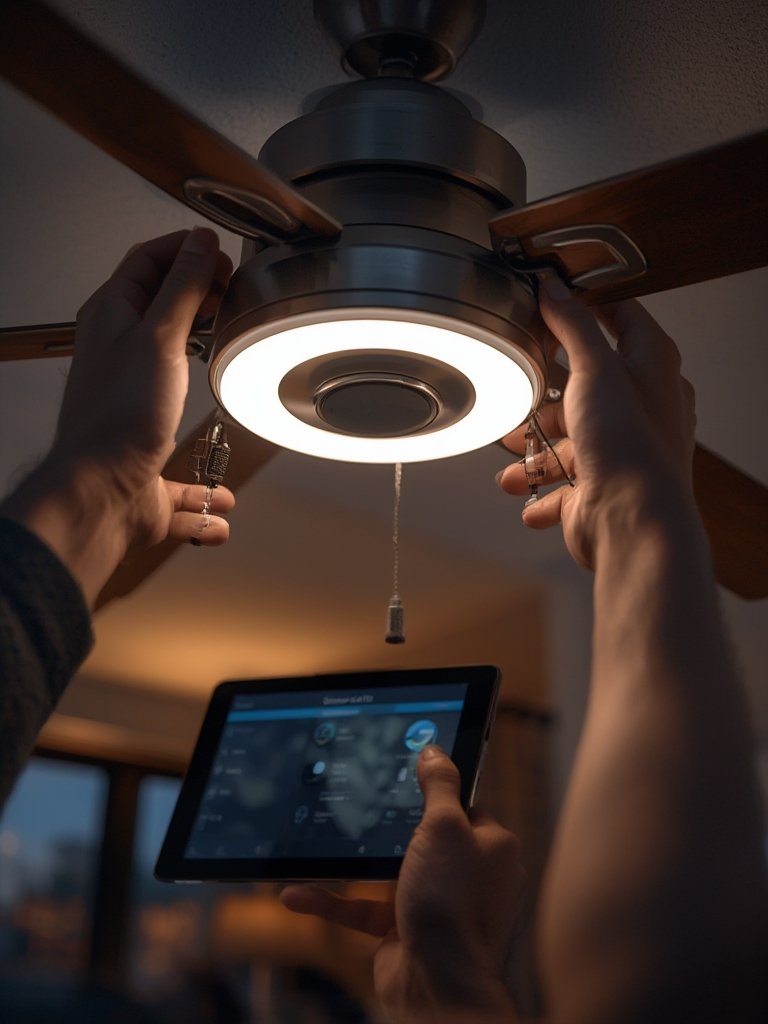
Finally, test your setup: use the remote, the app, and your voice assistant to make sure all features work as expected. For renters or those avoiding hardwiring, look at wireless puck lights or cordless table lamps for additional no-install upgrades.
If you find your existing system incompatible, consider cost-optimized models developed for easy user installation, particularly growing in high-demand regions (source).
Maintenance is simple for most smart fans—regular dusting and checking for software updates through the app. If integrated LEDs or controls fail, some brands allow user-replaceable modules, while others may require professional service.
Advanced Analysis and Common Pitfalls
Despite the rapid growth in smart fan light remote adoption, users can face several pitfalls and obstacles. Here’s a realistic breakdown based on 2024 market research and real-world scenarios.
| Feature/Function | Smart Remote | App Control | Voice Assistant |
|---|---|---|---|
| Setup Complexity | Easy (plug & play) | Moderate, requires pairing/networking | Requires app + skill/integration |
| Offline Functionality | Yes (RF/Bluetooth) | Bluetooth—Yes; Wi-Fi—No | No (Internet required) |
| Scheduling/Automation | Limited/none | Advanced (timers, routines, scenes) | Possible via platform routines |
| Voice Control | No | Depends on app | Yes (hands-free) |
| Reliability | High (no dependence on Wi-Fi) | Varies (depends on app/cloud stability) | Can fail if Wi-Fi/platform is down |
Most reported pitfalls and challenges:
- Installation barriers. High installation and upgrade costs remain a barrier, especially in developing markets (source). Compatibility with existing fixtures is often unclear prior to purchase.
- No universal standards. Not all smart modules work with all fans or home platforms. Multi-platform support (68% of new models) can still require brand-specific apps and skills.
- Wi-Fi dependence. Many smart features require constant internet access; power or Wi-Fi outages can disable app or voice control, though physical remotes often continue working.
- Energy savings claims vary. While 37%–43% efficiency improvements are reported, not all models deliver equal results, especially if not using BLDC motors or optimized LED lights (source).
- Security and privacy. Most competitor articles overlook user privacy, data collection, and reliability concerns about smart fan light remotes and apps—these remain largely unaddressed in the public documentation.
Looking for more on energy efficiency standards? Explore the impact of adjustable color temperature lighting and solar outdoor lights on whole-home savings.
Finally, it’s worth noting that formal LED or smart controller certifications (such as UL or CE) are not consistently documented for ceiling fan light kits by manufacturers, leaving some ambiguity for buyers in regulated markets. EU Ecodesign regulations and the US Department of Energy’s 2023 standards, however, continue driving replacement and upgrade cycles, especially for sustainability-focused consumers.
Conclusion
The smart fan light remote market is rapidly evolving, with new features and efficiency improvements expanding every year. Whether you want app scheduling, hands-free control with Alexa or Google Assistant, or seamless Bluetooth functionality, there is a smart fan light remote for nearly every home upgrade. Just be aware: installation costs, system compatibility, and privacy concerns require honest evaluation before you take the leap.
Ready to bring your ceiling fan into the smart era? Start by comparing models that fit your wiring setup and automation needs. The right smart fan light remote can streamline your comfort, cut energy costs, and create a more adaptive home—just follow this guide, and you’ll avoid the common mistakes. Not sure where to start? Browse our guides on flicker-free LED bulbs or voice-controlled lights for even more smart home inspiration.
Upgrade your fan today and enjoy smarter comfort with confidence!
FAQ
Can I retrofit any ceiling fan with a smart fan light remote?
Most modern ceiling fans with accessible wiring and a canopy can support a universal smart remote kit, but older or atypical models may have compatibility issues. Always check the manufacturer’s compatibility list before purchase.
Do I need Wi-Fi for a smart fan light remote to work?
Basic remote features (on/off, speed, light) often work via RF or Bluetooth without Wi-Fi. Advanced controls like app automation or voice assistants require a stable Wi-Fi connection.
Are smart fan light remotes energy efficient?
Newer models, especially those using BLDC motors and integrated LED lights, offer up to 43% greater energy efficiency. Make sure to choose models marketed with proven energy-saving technologies.
What should I do if my smart fan loses connection?
Check your Wi-Fi or Bluetooth stability. Physical remotes generally remain functional; reconnect app or re-pair the device as needed. Ensure your firmware is current for best results.
Is there a difference between smart fan control via remote, app, or voice assistant?
Yes. Remotes offer the highest offline reliability, apps provide detailed automation, and voice assistants enable hands-free use. Most smart fans now offer all three options, but features may vary.