

Minimal lighting ideas for small apartments can completely transform tight spaces, making them feel bigger, brighter, and more inviting without crowding your home. If you’re frustrated by dim corners, bulky lamps, or need easy but effective solutions, you’re in the right place. This guide covers the best strategies, actionable steps, and what’s trending in 2024—without skipping over the realities and common mistakes.
Key Takeaways
- Minimal lighting makes small apartments feel larger and is now easier than ever with new smart and plug-and-play systems.
- Energy-efficient options like LED strips and motion sensors cut down on electricity bills and clutter.
- Watch out for common issues such as poor installation, wrong color temperature, and cheap fixtures that don’t last.
- What Are Minimal Lighting Ideas for Small Apartments?
- Step-by-Step Guide: Installing Minimal Lighting Solutions
- Advanced Analysis & Common Pitfalls
- Conclusion
- FAQ
What Are Minimal Lighting Ideas for Small Apartments?
Minimal lighting ideas for small apartments focus on maximizing light without using bulky fixtures or wasting precious space. This approach uses slim, versatile products like Under-cabinet LED strips, under-cabinet lights, and wall-mounted lamps to add both function and style. The trend in 2024 is toward minimalist design—simple shapes, neutral colors, and fixtures that nearly disappear into your décor, keeping your apartment feeling open and uncluttered.
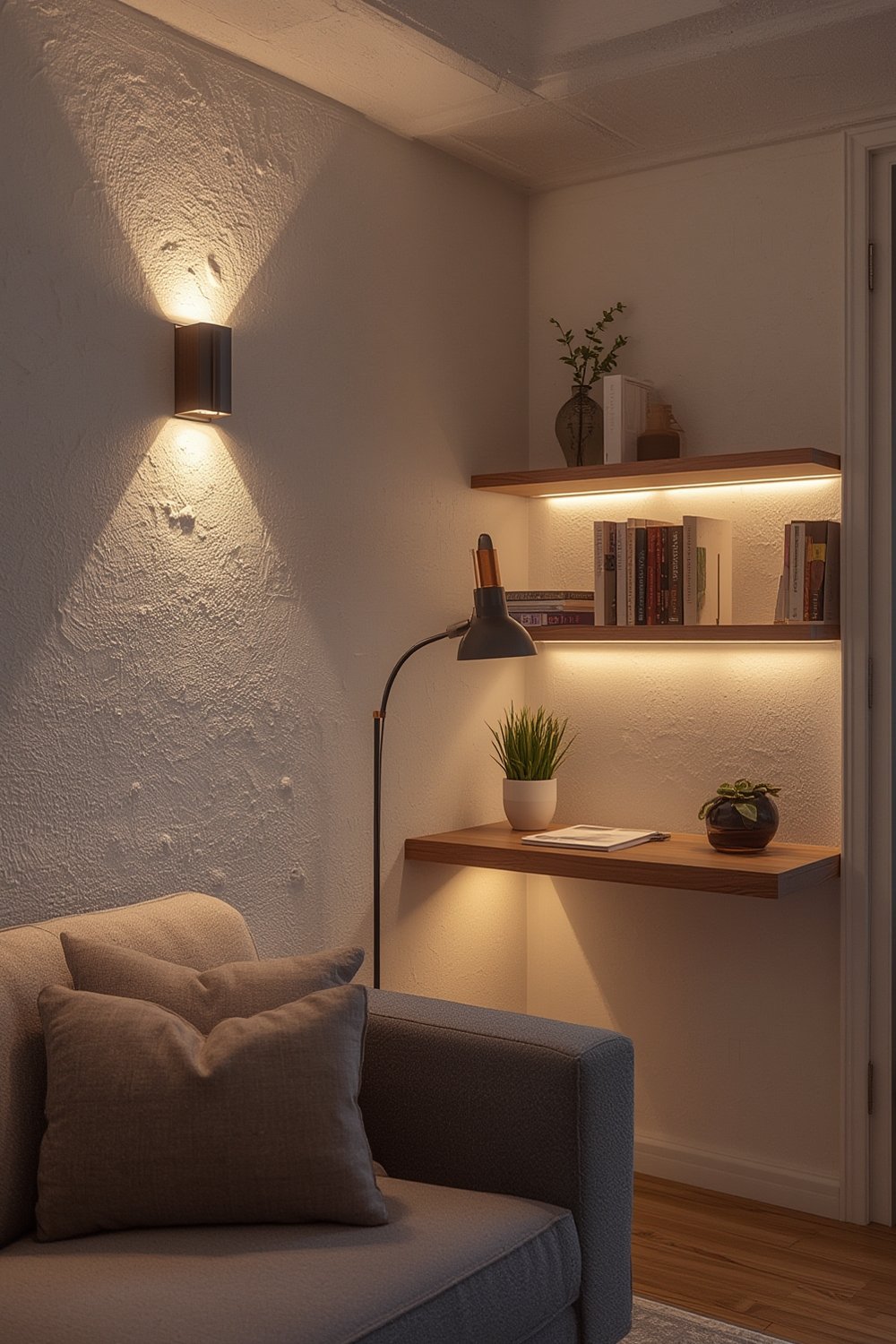
What makes this style stick is how well it supports day-to-day living in compact spaces. For example, replacing floor lamps with Smart LED strips—such as the Philips Hue indoor smart LED strip—frees up floor space while letting you adjust mood and brightness from your phone or voice assistant.
Minimal lighting also increases visual comfort. Poorly placed or overly harsh overhead lights create glare and sharp shadows, making apartments look smaller and feel less cozy. By layering adaptable lighting—like under-cabinet strip lights in kitchens or Stick-on puck lights for display shelves—you get soft, functional light exactly where you need it.
New trends in smart lighting integrate voice controls, scheduling, and tunable white lighting. This means you can switch from energizing daylight for work to warm, relaxing tones in one tap, creating a more enjoyable environment. Industry reports highlight these benefits and the growing focus on minimal, energy-efficient fixtures for multi-family dwellings (Kanlux 2024 Lighting Trends).
Step-by-Step Guide: Installing Minimal Lighting Solutions
Setting up minimal lighting in your small apartment doesn’t require an electrician—or a big budget. Here’s how to get it right, prevent common mistakes, and maximize every inch of your space.
- Assess your space and identify key zones. Pinpoint where you need functional light (work areas, kitchen counters) versus ambient or mood lighting (living area, bedroom corners).
- Choose fixtures for each area based on need and space:
- Under-cabinet LED strips: For kitchens and workspaces, consider COB LED strip lights that give a continuous glow with no hotspots. Look for USB rechargeable types when wiring isn’t an option.
- Plug-in or battery wall sconces: Great for adding light without giving up floor space.
- Stick-on puck lights: Perfect for closets, shelves, or display nooks. See easy puck light installation tips.
- Portable table or floor lamps: Cordless, rechargeable models provide extra flexibility. Get inspiration from the cordless table lamp guide.
- Smart LED strips with RGBIC or tunable white: These add color and dynamic settings for mood lighting. Check out smart LED strip ideas.
- Decide on color temperature and mood. Choose adjustable white lights (2700K-6500K) so you can switch from energizing work light to cozy evening warmth. This is essential for small apartments that serve multiple purposes. (Learn more about color temperature selection.)
- Install carefully:
- For strips and pucks, clean the surface before applying adhesive for a secure hold.
- If hardwiring is required but you rent, look for plug-in or battery-powered alternatives to avoid deposit loss.
- Use integrated dimmers or smart controls if possible—this adds immense flexibility with a minimal footprint.
- Connect to smart controls if possible: Use platforms like Alexa, Google Home, or Apple HomeKit. Many smart strips and bulbs offer app control and scheduling—ideal for apartments where switches may not be in the right spot. Read our voice-controlled lighting guide for setup and compatibility tips.

If you want bonus points for design, consider running a flexible neon LED strip around a ceiling edge or behind furniture for a floating effect. DIYers often use LED neon flex strips to create striking yet space-saving statements.
Finish with removable options—like sunset lamps or battery-operated branch lights—for seasonal décor shifts or to avoid landlord issues. See how LED branch lights can add dramatic accents in tight spots in our decorative branch lights review.
Advanced Analysis & Common Pitfalls
While minimal lighting offers many advantages, several mistakes can undermine your results or even lead to higher costs. Here’s what the data and expert experience show—plus smart ways to avoid them:
- Poor color temperature management: Installing “cool white” (above 4000K) everywhere can make small apartments feel harsh and unwelcoming. Mix or choose tunable white lights to adapt to time of day and use case (source).
- Cheap, unreliable products: Some low-cost strip lights or pucks dim quickly or have faulty sensors. Prioritize models with solid reviews or reputable brands, especially for motion sensor and rechargeable solutions.
- Insufficient brightness: Underestimating lumen requirements leads to dark corners or wasted money doubling up on fixtures. For kitchens and work zones, under-cabinet strips should emit 200–400 lumens per foot for true usability (see installing under-cabinet lighting).
- Poor adhesion or installation: Dusty or greasy surfaces weaken adhesive-backed lights. Always prep surfaces; for renters, removable mounting strips help avoid wall damage.
- Overuse of accent lighting: Too many color-changing or “fun” lights (like RGB LED strips or sunset projectors) can overwhelm small spaces and make rooms feel cluttered, so balance accent with practical lighting.
- Energy efficiency confusion: While almost all LED solutions are more efficient than classic bulbs, not all minimal fixtures are created equal. Some smart bulbs use standby power even when “off.” Choose verified low-watt fixtures, and check product specs for standby draw. As a reference, Kanlux XLED EX bulbs use just 4 watts to match the light output of 60-watt traditional bulbs (source).
| Lighting Type | Best For | Pros | Cons/Pitfalls |
|---|---|---|---|
| Under-cabinet Strips | Kitchens, workspaces | Space-saving, bright, easy install | Adhesion can fail on greasy surfaces; weak models may flicker |
| Stick-on Puck Lights | Closets, display shelves, pantries | No wiring, budget friendly | Short battery life in cheap models; weak adhesive |
| Smart RGB LED Strips | Living areas, behind TVs, accent | Dynamic mood, app/voice control | Can be distracting if overused; complex setup with multiple brands |
| Cordless Table Lamps | Bedside, desks, tiny tables | No tripping hazards, ultra flexible | Limited brightness if not chosen carefully |
| Motion Sensor Closet/Stair Lights | Hallway, stairs, closets | Safety, true convenience | False triggers in some models, may miss slight movement |

Conclusion
Minimal lighting ideas for small apartments are about doing more with less: better design, smarter controls, and flexible, energy-efficient solutions that enhance real life in compact homes. Focus on the right mix of functional and ambient lighting, prioritize quality (even on a budget), and don’t overlook installation details. Transform your space today—try one of the steps above for instant impact, and explore the guides linked throughout for deeper dives.
Ready to get started? Bring the best minimal lighting ideas for small apartments into your home now. Got a question or want a product recommendation? Drop a comment below or explore the next guide.
FAQ
What’s the most space-efficient lighting for a tiny apartment?
Under-cabinet LED strips and plug-in wall sconces are top picks. They give big light output without footprint and can be installed with minimal tools.
How do I avoid harsh lighting or glare in a small room?
Choose fixtures that offer dimming and adjustable color temperature, such as tunable white LEDs. Place lighting sources at eye level or indirect angles to soften overall light.
Can renters add minimal lighting without risking their deposit?
Yes, by using battery-operated stick-on lights or plug-in fixtures. Avoid drilling holes, and opt for removable adhesive strips for installation.
Are smart lighting systems worth it in a small apartment?
Smart lighting adds convenience and energy savings, especially with app or voice controls. Just make sure your chosen system is compatible with your device ecosystem.
How do I choose the right color temperature for each area?
Use cooler whites (4000K-6500K) for task zones (kitchens, desks) and warmer whites (2700K-3500K) for relaxing spaces. Adjustable lights make this even easier.