

Kitchen LED strip lights have rapidly become the go-to solution for anyone aiming to brighten their cooking space, save on energy, and enjoy clean, modern design—all without complicated wiring or bulky fixtures.
Key Takeaways
- LED strip lights are a fast-growing, energy-efficient option for both task and accent lighting in modern kitchens, with the market expected to more than double by 2030.
- Choosing between 5050 and 3528 LEDs can have a big impact on brightness, installation flexibility, and running costs for your kitchen setup.
- Smart features, motion sensors, and rechargeable options are making DIY under-cabinet lighting easier and even more convenient than traditional installations.
- Kitchen LED Strip Lights: What They Are and Why They Matter
- Step-by-Step Guide: Planning and Installing Kitchen LED Strip Lighting
- Advanced Analysis & Common Pitfalls
- Conclusion
- FAQ
Kitchen LED Strip Lights: What They Are and Why They Matter
LED strip lights are flexible, low-profile circuit boards embedded with light-emitting diodes (LEDs) that stick directly under cabinets or along edges to illuminate countertops, backsplashes, and workspaces. Their surge in kitchen popularity is fueled by dramatic improvements in energy efficiency (up to 75% better than old incandescent options), long service life, and growing integration with smart home platforms.
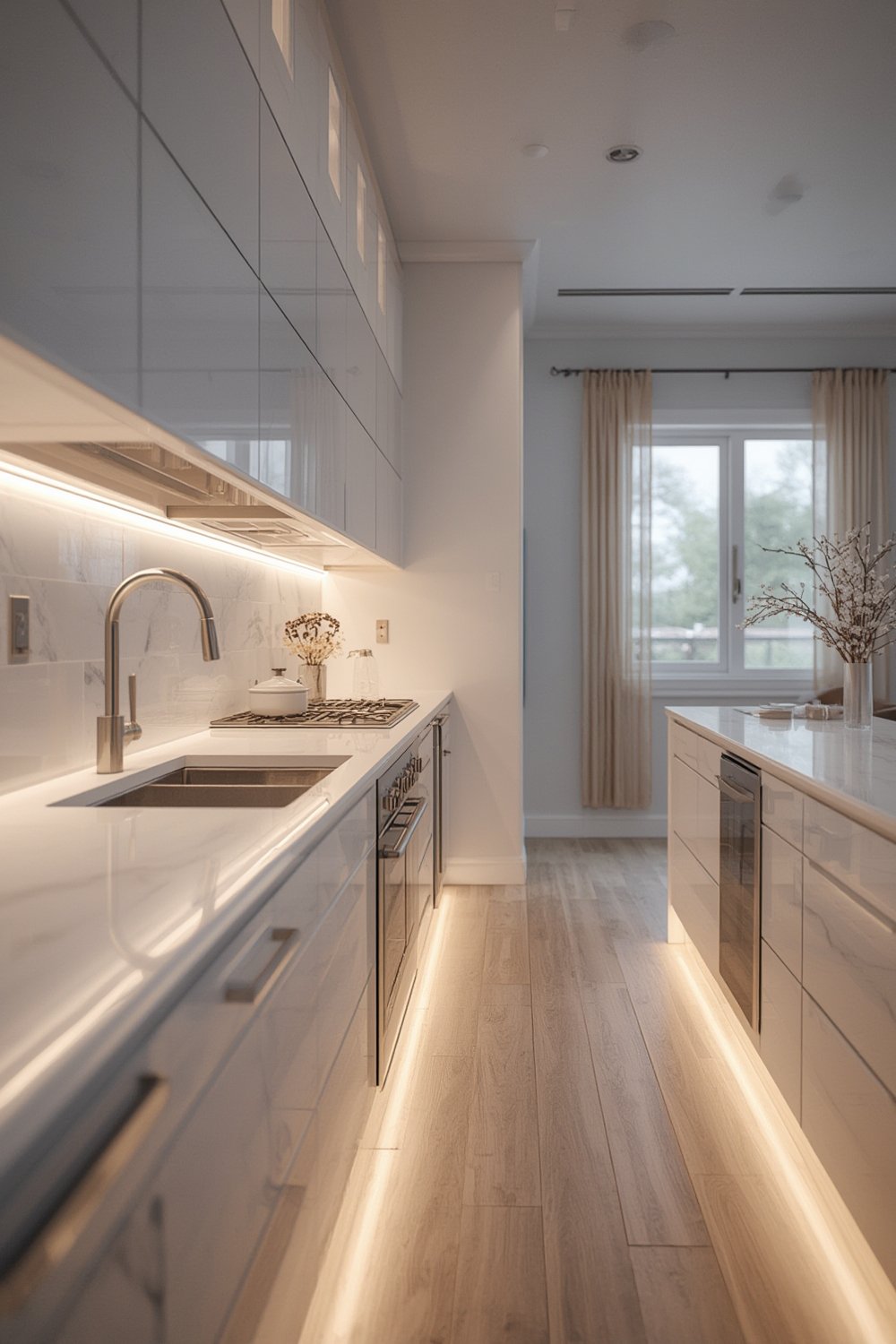
The market for kitchen LED strip lighting is booming, with the global LED strip market projected to reach almost USD 3 billion by 2030—driven by the surge in residential kitchen upgrades, sustainability concerns, and new product features like dimming, color temperature adjustments, and app control.
Choosing LED strips over traditional lighting isn’t just fashionable. It’s a practical step for homeowners who want better visibility, customizable ambiance, lower electric bills, and minimal heat generation in their kitchen workspace. This is why you now see flexible LED installations outpacing rigid fixtures in kitchens, especially in North America and Asia-Pacific, where ease of installation is a leading factor.
For focused counter lighting, under-cabinet strips offer a much cleaner look and far more control than bulky tube lights. Integrated smart and rechargeable options are also simplifying upgrades—see more on USB rechargeable under-cabinet lighting for renters or quick DIY projects.
Step-by-Step Guide: Planning and Installing Kitchen LED Strip Lighting
Getting the most out of your kitchen LED strip lights starts with careful planning and some know-how. Here’s how to approach it for a functional, long-lasting, and beautiful outcome:
Step 1: Assess Your Lighting Needs
Decide if you want pure task lighting (bright, focused illumination) or to create a warm glow for ambiance. For task lighting—especially over worktop zones—consider higher-lumen, 5050 LED strips. For gentle mood lighting or awkward placements, 3528 strips offer easier routing and lower energy use.
Step 2: Choose Your Power Source
Most kitchen LED strips are plug-in for reliability and higher brightness, but USB-rechargeable and battery models are gaining ground, especially for areas with limited access to outlets or renters who can’t make permanent changes. For wiring-free upgrades, check out options highlighted in our cabinet rechargeable lighting guide.
Step 3: Select the Right Color Temperature
Go for warm white (2700K-3000K) for a cozy, relaxing atmosphere or stick with cool white (4000K-6000K) if you want brighter, clearer visibility for food prep. Some premium strips even offer adjustable color temperatures to adapt between task and ambient lighting—read about how this flexibility affects workflow in our color temperature lighting guide.
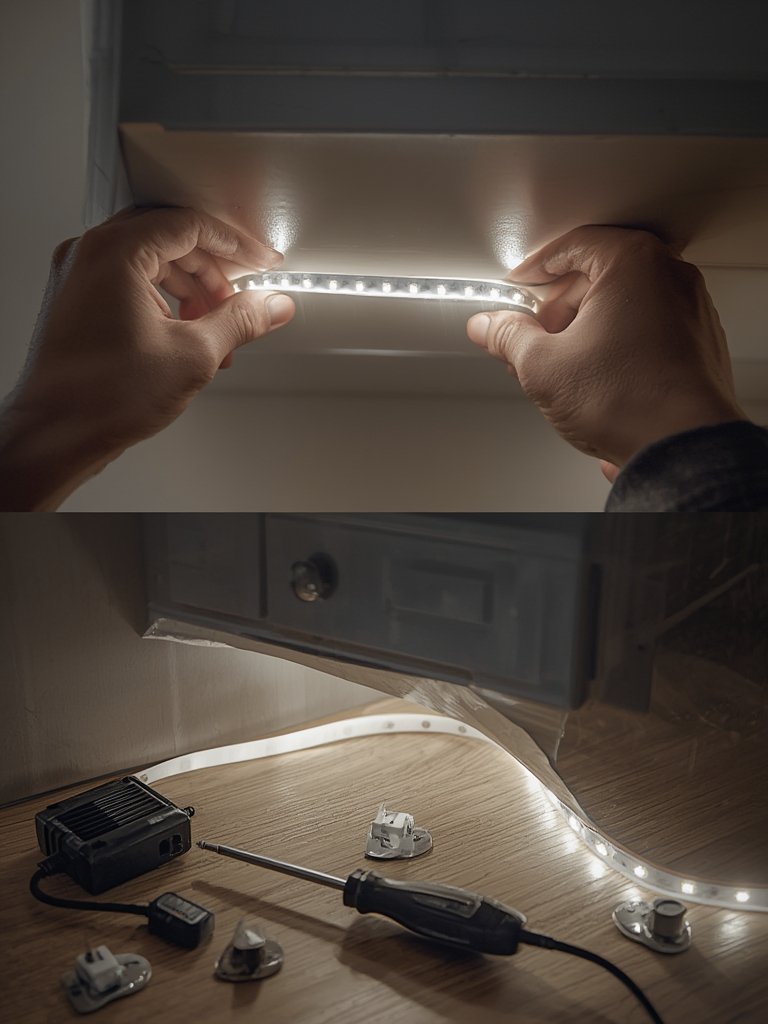
Step 4: Prep and Clean the Installation Surface
LED strips stick best to smooth, dust-free surfaces. Clean cabinet bottoms or backsplashes with rubbing alcohol and let dry completely. If your surface is textured or painted, consider supplemental mounting clips for long-term adhesion.
Step 5: Cut and Connect Your Strips (If Needed)
Only cut the strip at marked cut points—usually every 3 to 6 LEDs. Plan for connector use at inside or outside corners. When using jumpers, test the strip before permanent installation to rule out connection issues.
Step 6: Mount LED Strips and Connect Power
Peel, stick, and press LED strips into place. Plug in or connect to your power source. If using remote, app, or voice control, sync devices and test brightness, color temperature, and dimming features.
Step 7: Fine-Tune with Dimmers or Motion Sensors
If you’re looking for ultimate convenience, try motion sensor under-cabinet strips, which are both energy-saving and great for hands-free nighttime access. See our in-depth review of dotless COB strip lights for continuous light, and upgrades like app-controlled smart strip lights to personalize kitchen mood even further.
Advanced Analysis & Common Pitfalls
While LED strip lights dramatically simplify kitchen lighting, there are issues to watch out for—especially for DIYers or first-time installers.
Comparing LED Strip Specifications
| Strip Type | Best Use | Brightness | Energy Use | Flexibility | Notes |
|---|---|---|---|---|---|
| 5050 LED strips | Task lighting / Large areas | High | Higher | Moderate | Three LEDs per unit, robust & bright, slightly more power draw |
| 3528 LEDs | Accent / Tight spaces | Moderate | Low | High | Thinner strips, more flexible; ideal for corners & small spaces |
| COB LEDs | Dotless task/ambient | Very high | Varies | Moderate | Provides even, continuous lighting; often requires no diffuser |
Common Pitfalls to Avoid
- Poor Surface Preparation: Adhesive backing won’t stick to dirty or greasy surfaces. Always clean thoroughly first.
- Overloading Circuits: Too many strips on a single transformer or plug can cause flickering or early burnout. Calculate total wattage before setting up.
- Buying the Wrong Brightness/Color: Brightness is measured in lumens, not watts. Kitchens often need brighter, cooler light than living rooms or bedrooms.
- Hotspots and Dark Spots: Spacing strips too far apart or using non-diffused strips may create uneven illumination. Explore COB options for a smooth, continuous glow (COB LED guide).
- Skipping Motion Sensors or Dimmer Switches: Missed opportunities for energy savings and convenience.
- Not Testing Functionality Before Final Mounting: Always power up and test operation before pressing adhesives for good.
Advanced homeowners may want to explore RGBIC strips for dynamic effects, or automated control via smart platforms like Alexa or Google Home. But beware, not all smart strips play nicely with every hub—always check compatibility and reviews before buying complex options.
For renters or temporary installs, USB rechargeable under-cabinet lighting are a pragmatic alternative. Explore more in our installation guide for plug-free cabinet lighting.
Conclusion
Kitchen LED strip lights are a versatile, energy-efficient upgrade for modern homes. Whether you want bright, shadow-free food prep zones or dimmable mood lighting for dinner parties, the right installation delivers both style and substance. Evaluate your brightness needs, pick the best strip for your kitchen layout, and don’t overlook convenience features like dimming, motion sensors, or smart integration. Make the most of kitchen LED strip lights by planning your install and investing in quality—your eyes, energy bill, and future kitchen projects will thank you.
Ready to transform your kitchen? Compare the latest products and more DIY guides in our full under-cabinet lighting resource.
FAQ
How long do kitchen LED strip lights usually last?
Quality LED strips usually last 25,000 to 50,000 hours, which can mean well over a decade with moderate daily use in a kitchen.
What’s the difference between 5050 and 3528 LED strips?
5050 strips have three diodes per chip, offering brighter light for work areas. 3528 are slim, lower-powered, and better for accent lighting or tight spaces.
Can I install LED strip lights in my kitchen without hardwiring?
Yes! Modern plug-in, USB rechargeable, and battery-powered strips don’t require any hardwiring. See our guide on rechargeable options for details.
Are motion sensor under-cabinet lights worth it?
If you want hands-free convenience or need lighting only when you’re actually at the counter, motion sensor lights are a low-cost way to save energy and add comfort.
How do I avoid visible “dots” or uneven lighting?
Choose continuous COB-style strips or use an integrated diffuser. Learn about spot-free installs in our COB LED kitchen strip guide.
[…] corner profiles can control glare and beam angle, especially under cabinets or along ceiling […]
[…] something that never failed. If you want to upgrade your lighting as you troubleshoot, explore our kitchen LED strip lights guide for more home comfort […]
[…] lighting—or a mix. For heavy chopping and reading, prioritize brightness and minimal glare. Use strip lights as functional under-cabinet options alongside your main […]